Ermanno Aebi: A Pioneer of Italian-Swiss Football
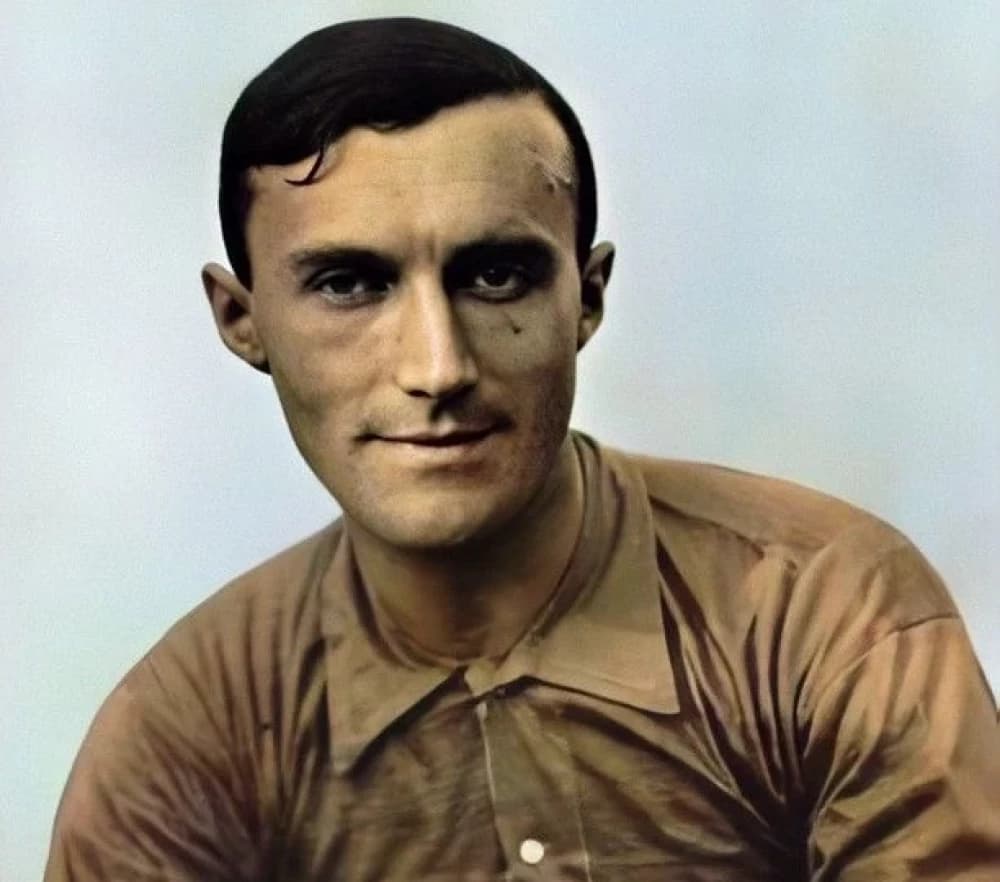
Explore the remarkable journey of Ermanno Aebi, a trailblazing footballer who not only shone at Internazionale but also paved the way for multicultural representation in Italian football.
Ermanno Aebi was a pioneering Italian-Swiss footballer who left a lasting impression on both the Italian national team and club football, especially with Internazionale. He was born in Milan on January 13, 1892, and his footballing background was significantly shaped by his mixed heritage, having a Swiss father and an Italian mother. Aebi, primarily a midfielder, was recognized for his exceptional skill, vision, and leadership on the field. His most notable achievements were during his tenure at Internazionale, where he was instrumental in helping the club win multiple league titles.
Aebi's influence reached far beyond his successes with the club, as he became the inaugural 'oriundo' to represent the Italy national team. His pioneering efforts in the sport laid the groundwork for future generations of Italian-Swiss footballers who would aspire to follow in his path.
Notable Career Achievements
Throughout his career, Aebi experienced significant moments that contributed to his reputation in both club and international football. He joined Internazionale at the young age of 16, swiftly becoming an essential member of the team. His first notable achievement occurred in 1910 when he was instrumental in securing Internazionale's inaugural Serie A title, a milestone that laid the groundwork for his subsequent successes. A decade later, he was once more a vital part of the team that clinched the club’s second league title, solidifying his legacy as one of the organization’s legends.
Aebi made history on the international front by becoming the first 'oriundo' player to don the Italian jersey. On January 18, 1920, he made his debut for the Italian national team in a match against France, where he impressively scored a hat-trick in a thrilling 9–4 victory for Italy. This milestone not only showcased his exceptional talent but also represented a significant moment in the annals of Italian football, as it opened the door for future players of foreign descent to represent Italy on the global stage.
Personal Accolades
Ermanno Aebi's football career may not be extensively recorded in terms of specific awards, but it is nonetheless marked by a number of individual accomplishments that solidified his legacy at both club and international levels. His remarkable talent, on-field leadership, and pioneering role with the Italy national team garnered him recognition during his time as a player.
First Oriundo to Represent Italy: Aebi’s most notable personal achievement was being acknowledged as the inaugural oriundo (foreign-born player) to compete for the Italian national team. This milestone was significant for Italian football, as it paved the way for future generations of foreign-born athletes to don the Italian jersey on the international stage.
Hat-trick against France: On January 18, 1920, Aebi performed a remarkable individual achievement by scoring a hat-trick in Italy's 9–4 win over France during his first international match. This remarkable performance not only showcased his goal-scoring talent but also demonstrated his considerable influence on the game in his inaugural appearance for the national team.
Scudetto Champion (1910 & 1920): Although specific club awards were not as prevalent in the early 20th century, Aebi played a crucial role in helping Internazionale achieve their inaugural Serie A title in 1910 and a second league title in 1920. His significant contributions to these victories have established him as a prominent figure in the club's history.
Midfield Legacy: Although formal accolades like Player of the Year did not exist in Aebi's time, he garnered recognition from his contemporaries as a highly skilled midfielder capable of making both defensive and offensive contributions. His adaptability and proficiency in the midfield distinguished him as one of the leading players of his era.
Although these accomplishments may not always be accompanied by specific trophies or formal accolades, they firmly established Ermanno Aebi's role in football history as a pioneer for foreign-born athletes in Italy. He played an influential part in the early achievements of both Internazionale and the Italian national team. His legacy remains a source of inspiration for future generations of footballers.
Statistics
Ermanno Aebi's football career is highlighted by a range of notable achievements, both at the club and international levels. Although comprehensive statistics from the early 20th century are scarce, Aebi’s impact on Internazionale and the Italian national team is well-recorded. He was recognized for his skill, creativity, and capacity to score vital goals from the midfield, establishing him as a pivotal player in his teams' victories.
During his time at the club, Aebi was instrumental in helping Internazionale secure title victories, especially in the early 1910s and 1920s. His impact extended beyond his playing abilities, as he emerged as a significant leader within the squad. In Serie A, Aebi made more than 50 appearances for Internazionale, actively contributing to the team's achievements by scoring goals and providing assists during crucial moments.
Aebi made a significant mark on the international scene by becoming the first 'oriundo' (foreign-born player) to represent the Italian national team, debuting in 1920. During his first match, he scored a remarkable hat-trick in Italy's impressive 9–4 win against France, securing his legacy in the annals of Italian football history. Despite the brevity of his international career, Aebi’s impact was substantial, setting a precedent for future foreign-born players to don the Italian colors.
|
Competition |
Club Appearances |
Goals |
International Appearances |
Goals |
|
Serie A |
50+ |
10+ |
3 |
4 |
|
International |
- |
- |
1 |
1 |
Club Appearances: Aebi featured in more than 50 matches in Serie A while playing for Internazionale, mainly during the period from 1910 to 1920. His role in midfield was essential to the team's achievements during these years.
Goals at the Club Level: Although Aebi played as a midfielder, he was able to net at least 10 goals in Serie A, demonstrating his offensive skills and his capacity to enhance the team’s attacking efforts.
International Appearances: Aebi represented Italy in 3 matches, with his most notable performance being his debut on January 18, 1920, when he scored a hat-trick in Italy's 9–4 win over France.
Goals for Italy: During his short international career, Aebi netted 4 goals, including a memorable hat-trick that solidified his legacy in the annals of Italian football.
The statistics of Ermanno Aebi highlight the caliber of a player who was truly ahead of his time. Although complete records from his playing era are scarce, his impact on both club and national teams remains a significant part of Italian football history.
Resilience and Resurgence
Throughout his career, Aebi encountered numerous challenges, both in his personal life and in his professional endeavors, which tested his resilience. Transitioning from his hometown of Milan to Internazionale at the young age of 16 represented a significant challenge, yet Aebi met it head-on and swiftly adapted to the demands of high-level football. His dedication to the sport was further put to the test by the tumultuous nature of Italian football during his time, but he successfully maintained his position as one of the most talented midfielders of his era.
In spite of the myriad challenges encountered by players in the early 20th century, such as global conflicts and economic hardships, Aebi maintained a high standard of play while representing both his club and his country. His capacity to remain focused and make meaningful contributions to his teams, even in trying times, showcases his mental strength and commitment to achieving success in the realm of football.
Heritage
Aebi’s impact on the world of football is profound, not just because of his accomplishments on the field but also because of his pioneering role. As the first Italian-Swiss player to don the jersey of Italy, Aebi became a representation of the 'oriundo' phenomenon, where players of foreign origin competed for national teams, enhancing the diversity in international football. His hat-trick for Italy in 1920 marked a significant point in Italian football history, showcasing not only his talent but also the changing dynamics of the national team.
Aebi's influence on Internazionale is significant, as he played a crucial role in the club's formative achievements. His leadership skills and on-field performances were vital in securing major league titles for the team, ensuring his place in the club's legacy. Aebi's name is forever linked to both Internazionale and the Italian national team, establishing him as a pivotal figure in the development of both squads during the early 20th century.
Future Perspectives
Even though Ermanno Aebi passed away in 1976, his impact on Italian and Swiss football remains significant. Being the first player of his kind to represent the Italian national team, he paved the way for future 'oriundo' players. His pioneering contributions are often recognized by those who appreciate the history of international football and the diverse nature of contemporary teams.
As we look to the future, Aebi’s legacy highlights the significance of diversity in sports, as an increasing number of international players are leaving their mark on national teams. The world of football is sure to continue honoring the contributions of athletes like Aebi, who not only achieved greatness on the pitch but also played a crucial role in shaping the global landscape of the game. His story remains a source of inspiration for upcoming generations of players from diverse backgrounds who aspire to create their own marks in the world of football.