Lazio: A Legacy of Excellence in Italian Football
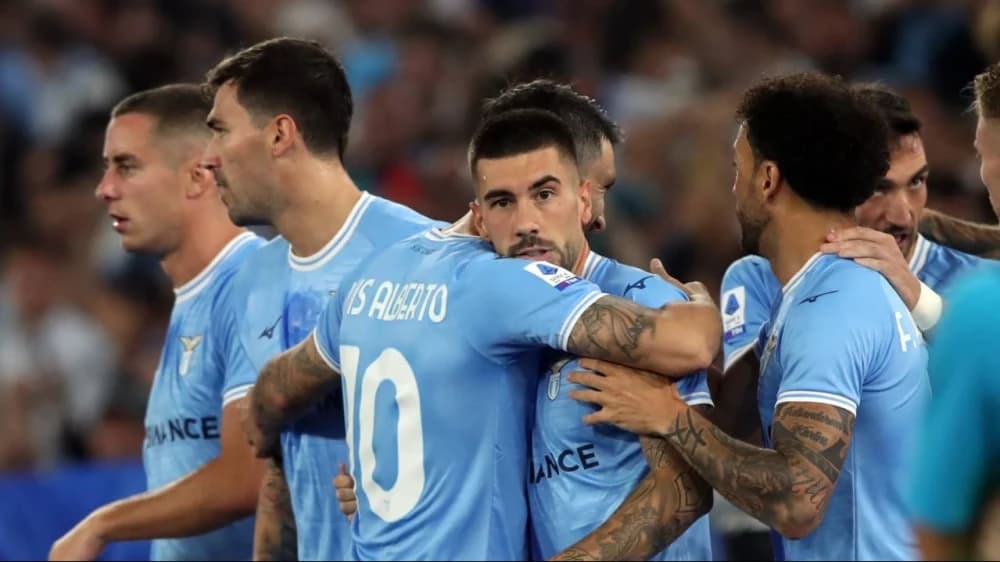
Founded in 1900, Società Sportiva Lazio has become a symbol of resilience and passion, showcasing rich history, domestic glory, and commitment to future growth in football.
Established on January 9, 1900, in the historic Prati area of Rome, Società Sportiva Lazio arose not just as a football team but as a trailblazing multi-sport institution. Originally created to promote athletics and embodying the principles of sport as a source of unity, Lazio's founding set the stage for one of Italy's most legendary football clubs. With a rich history spanning over a century, Lazio has established itself as a symbol of endurance, devotion, and fervor.
The sky-blue and white colors of Lazio, drawing inspiration from Greece's Hellenic heritage, symbolize a link to classical history that resonates within the eternal city. This blend of cultural and historical elements positions Lazio not just as a football club representing Rome, but as an organization intricately connected to the city’s essence. The Derby della Capitale, a clash with AS Roma, remains a passionate rivalry that captivates fans around the globe, exemplifying the struggle for dominance in Rome.
The inclusive spirit and dedication to community engagement of Lazio have enabled the club to extend its influence beyond the realm of football. Despite encountering challenging periods, including financial struggles and relegations, Lazio's legacy as a club that confronts obstacles with determination continues to motivate its fans, who are affectionately known as the Laziali.
Achievements of the Team
The trophy collection of SS Lazio narrates a tale of victories and perseverance. The club's journey to domestic success commenced with their Coppa Italia win in 1958, a significant achievement that secured their position among Italy’s footballing elite. Nonetheless, it was their inaugural Scudetto in the 1973–74 season that granted them exceptional acclaim. With coach Tommaso Maestrelli at the helm and fueled by the dynamic Giorgio Chinaglia, Lazio dominated Serie A, demonstrating their strategic and technical abilities.
The 1990s marked the beginning of Lazio's illustrious period, characterized by significant achievements in European tournaments. In 1999, they secured the UEFA Cup Winners’ Cup by overcoming Mallorca in a thrilling final. This victory was soon followed by a win in the UEFA Super Cup against the challenging Manchester United team. These consecutive European triumphs established Lazio as a significant contender on the international football scene.
Lazio's supremacy in domestic football persisted into the year 2000 when they secured their second Serie A title, achieving a remarkable double by also winning the Coppa Italia. In addition to their league success, Lazio has continually performed well in knockout tournaments, accumulating a total of seven Coppa Italia titles and three Supercoppa Italiana triumphs. Their most recent Coppa Italia victory in 2019 highlighted their capacity to succeed under pressure.
Strengths and Weaknesses
Lazio’s key strength is its capacity to blend tactical discipline with instances of individual excellence. Under the guidance of Maurizio Sarri, the team has honed a possession-oriented approach, fully utilizing the skills of creative midfielders such as Sergej Milinković-Savić and Luis Alberto. The forward line, spearheaded by Ciro Immobile, consistently poses a goal-scoring threat, rendering Lazio a challenging adversary in closely contested matches.
The defensive framework has seen enhancements, with Alessio Romagnoli taking on a leadership role in the defense. Lazio excels in applying high pressure to thwart opponents' buildup efforts, which has played a crucial role in securing important victories, particularly against top rivals. Nonetheless, the team's dependence on a limited group of players for steady performance reveals a weak point when injuries or fatigue occur, especially during busy match schedules. Additionally, squad depth poses a problem, as the substitutes often lack the experience and quality necessary to adequately replace starting players. This shortcoming has occasionally obstructed Lazio's ambitions in European competitions where sustaining peak performance across several tournaments is crucial. Tackling these issues is essential for unlocking their complete potential.
Tactics & Playing Style
Under Sarri, Lazio's tactics represent a combination of contemporary football strategies and classic Italian defensive structure. Utilizing a 4-3-3 formation, the team constructs their attacks through deliberate ball movement, making use of overlapping full-backs to widen the field. The midfield trio acts as the driving force, with Milinković-Savić leading the play while adding a physical presence during transitions.
The offensive strategy centers on Immobile, whose off-the-ball movements create openings for wingers and midfielders to utilize. Lazio's emphasis on rapid counterattacks introduces a degree of unpredictability, frequently surprising their adversaries. Additionally, set-pieces are a significant strength, as aerial threats consistently challenge opposing defenses.
On the defensive end, Lazio adopts a compact formation, focusing on zonal marking to counteract threats in the attacking phase of their opponents. Sarri’s approach prioritizes high pressing, aiming to disrupt the opposition's buildup early and create turnovers in advanced areas of the field. Nonetheless, the team sometimes finds it challenging against opponents who are adept at breaking through press strategies or utilizing width in their playing style, which can lead to vulnerabilities in their defensive setup.
Memorable Matches
The story of Lazio is punctuated by memorable matches that have significantly influenced their history. The decisive game for the 1974 Scudetto, in which they triumphed over Foggia with a 1-0 scoreline, remains a cherished moment for fans, symbolizing Lazio's emergence as champions of Italy. This victory, characterized by a mix of strategic cleverness and resolute performances, represented a pivotal moment in the club's legacy.
In 1998, another memorable match took place when Lazio competed in the UEFA Cup final against Inter Milan. Though they ended up as runners-up, the match showcased their ability to perform at the highest level. A year later, Lazio's victory in the UEFA Cup Winners’ Cup final against Mallorca cemented their reputation as a formidable force in European football. One of the most emotionally charged encounters in Lazio’s history occurred during the 2013 Coppa Italia final against Roma, where Senad Lulić's single goal clinched a 1-0 win, granting Lazio bragging rights in the eternal city and etching an unforgettable moment in the history of this fierce rivalry.
In more recent times, Lazio's victory in the 2019 Coppa Italia final against Atalanta highlighted their capacity to perform in crucial moments. The 2-0 win emphasized the team's determination and capability to secure trophies when facing pressure.
Looking Ahead
As Lazio progresses, the club's future vision is centered on sustainability and growth. Under the leadership of Claudio Lotito, financial stability has been made a priority, enabling strategic investments in young talent and infrastructure. Players such as Nicolò Casale and Matías Vecino represent Lazio’s dedication to assembling a squad that can achieve long-term success. The youth academy of Lazio continues to nurture promising talent, with the goal of integrating homegrown players into the first team. Striking a balance between this development and strategic signings will be crucial for maintaining competitiveness in both Serie A and European competitions.
Upgrading their facilities, particularly the Formello training center, demonstrates the club's ambition to remain a leader in Italian football. Furthermore, their ongoing involvement in European competitions provides an opportunity to bolster their global reputation. The outlook is promising for Lazio, as the team is set to vie for both domestic and international titles. With the support of its passionate fanbase and a legacy built on resilience, Lazio continues to embody the indomitable spirit of Rome on the football stage.