Lazio: A Legacy of Resilience and Sporting Excellence
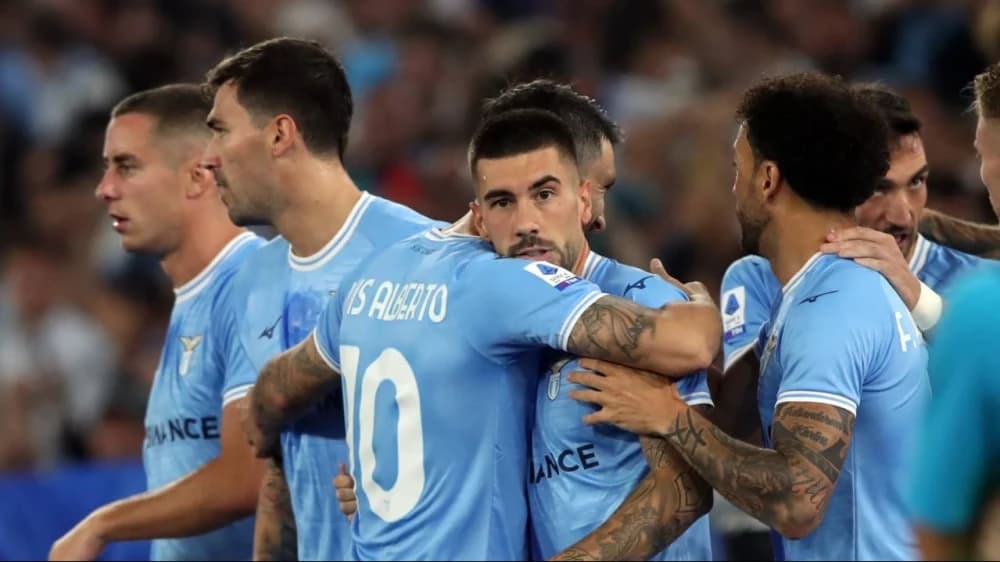
Founded in 1900, SS Lazio has established itself as one of Italy's most iconic football clubs, embodying resilience, community spirit, and a commitment to sporting excellence.
Established on January 9, 1900, in the historic Prati district of Rome, Società Sportiva Lazio emerged as a trailblazing multi-sport organization rather than just a football club. Created with the goal of promoting athletics and exemplifying the principles of sport as a source of unity, Lazio's inception laid the groundwork for one of Italy's most renowned football clubs. Over a century of history has allowed Lazio to become a symbol of resilience, loyalty, and passion.
The sky-blue and white colors of Lazio, inspired by the Hellenic heritage of Greece, symbolize a bond with classical history that is emblematic of the eternal city. This blend of cultural and historical elements positions Lazio not only as a representative of Rome in the world of football but also as a club intricately connected to the identity of the city. The Derby della Capitale, fiercely contested against AS Roma, remains a storied rivalry that captivates fans around the globe, representing the struggle for dominance in Rome.
Lazio's commitment to inclusivity and community involvement has enabled it to rise above the confines of football. Despite encountering challenging periods, including financial difficulties and relegations, the club's enduring legacy as one that embraces challenges continues to motivate its fanbase, affectionately referred to as the Laziali.
Achievements of the Team
The trophy collection of SS Lazio narrates a tale of victories and resolve. The club's journey to domestic success started with their triumph in the Coppa Italia in 1958, a pivotal achievement that established them among the elite of Italian football. Yet, it was their first Scudetto in the 1973–74 season that brought them unmatched prestige. Guided by coach Tommaso Maestrelli and fueled by the dynamic presence of Giorgio Chinaglia, Lazio claimed the Serie A title, displaying their tactical acumen and technical skill.
The 1990s marked the beginning of Lazio’s illustrious period, characterized by notable achievements in European competitions. In 1999, they secured the UEFA Cup Winners’ Cup by overcoming Mallorca in a thrilling final. This victory was soon followed by another in the UEFA Super Cup, where they faced a tough Manchester United team. These consecutive European triumphs established Lazio as a prominent competitor on the continental football scene.
Lazio's reign in domestic football persisted into 2000 when they secured their second Serie A title, achieving a remarkable double with the Coppa Italia. In addition to their league success, Lazio has consistently performed well in knockout tournaments, accumulating seven Coppa Italia titles and three Supercoppa Italiana championships. Their most recent victory in the Coppa Italia in 2019 highlighted their capacity to perform under pressure.
Strengths & Limitations
Lazio's primary strength is its capacity to meld tactical discipline with instances of individual brilliance. Under the leadership of Maurizio Sarri, the team has honed a possession-oriented style, effectively utilizing the skills of creative midfielders such as Sergej Milinković-Savić and Luis Alberto. The attacking line, spearheaded by Ciro Immobile, consistently poses a goal-scoring threat, rendering Lazio a formidable adversary in tightly contested matches.
The defensive setup has seen enhancements, largely thanks to the leadership provided by Alessio Romagnoli at the back. Lazio's capacity to implement high pressing and disrupt the opponent's buildup has been crucial in achieving important victories, particularly against top-tier teams. Nonetheless, their dependency on a limited group of players for consistent performances reveals a weakness, especially when faced with injuries or fatigue during busy match schedules. Additionally, squad depth remains a concern, as the substitutes often lack the experience and quality needed to effectively replace first-team players. This shortfall has sometimes impeded Lazio's goals in European competitions, where maintaining peak performance across various tournaments is vital. Tackling these deficiencies is essential to realizing their full potential.
Tactics and Playing Style
Lazio's approach to tactics under Sarri embodies a fusion of contemporary football strategies and the classic defensive discipline characteristic of Italian football. Utilizing a 4-3-3 formation, the squad constructs its offensive plays through careful ball movement, leveraging overlapping full-backs to widen the field. The midfield trio acts as the driving force, with Milinković-Savić facilitating plays while adding a physical dimension during transitions.
The offensive strategy is centered around Immobile, whose off-the-ball movements open up opportunities for wingers and midfielders. Lazio emphasizes quick counterattacks, introducing an unpredictable factor that frequently catches their opponents unprepared. Additionally, set-pieces are a significant strength, as their aerial threats continuously challenge rival defenses.
In defense, Lazio utilizes a compact formation that focuses on zonal marking to mitigate threats within the final third of the pitch. Under Sarri’s leadership, the team employs a high-pressing approach that disrupts opponents during their buildup, leading to turnovers in advanced areas. Nonetheless, the team sometimes finds it challenging to cope with opponents who are proficient at breaking presses or using wide-play tactics, which can expose weaknesses in their defensive structure.
Memorable Matches
Lazio's history is marked by significant matches that have played a crucial role in shaping their reputation. The decisive Scudetto match in 1974, where they achieved a 1-0 victory against Foggia, is permanently engraved in the memories of supporters as the moment Lazio confirmed their status as champions of Italy. This victory, characterized by a combination of tactical ingenuity and determined performances, represented a pivotal moment in the club's journey.
An unforgettable match took place in 1998 when Lazio reached the UEFA Cup final against Inter Milan. Although they finished as runners-up, the game showcased their ability to compete elite on the biggest stage. The following year, their victory in the UEFA Cup Winners' Cup final against Mallorca firmly established them as a force in European football. One of the most emotionally charged matches in Lazio's history occurred in the 2013 Coppa Italia final against Roma, where Senad Lulić scored the only goal, leading to a 1-0 triumph and granting Lazio significant bragging rights in the eternal city, marking a memorable moment in the rivalry's history.
In more recent times, Lazio’s victory in the 2019 Coppa Italia final against Atalanta highlighted their capability to perform under pressure during crucial moments. The 2-0 win emphasized the team’s resilience and their knack for securing trophies when it matters most.
Prospects for the Future
As Lazio looks to the future, the club is emphasizing sustainability and growth in its vision. Under the leadership of Claudio Lotito, financial stability has been prioritized, enabling strategic investments in young talent and infrastructure. Players such as Nicolò Casale and Matías Vecino represent Lazio’s dedication to creating a squad that can achieve long-term success. The youth academy continues to yield promising players, with an objective of incorporating homegrown talent into the first team. Striking a balance between this development and targeted signings will be crucial for maintaining competitiveness in both Serie A and European competitions.
The club's aspirations to maintain its leadership in Italian football are evident in their plans to modernize facilities, which may include enhancements to the Formello training center. Furthermore, their regular involvement in European tournaments provides an opportunity to boost their international profile. Lazio's outlook is promising, as the team is well-positioned to contend for both domestic and international titles. As they continue to rise, supported by a dedicated fanbase and a history of resilience, Lazio stands as a testament to the unyielding spirit of Rome in the world of football.