The Gewiss Stadium: A Testament to Atalanta's Legacy
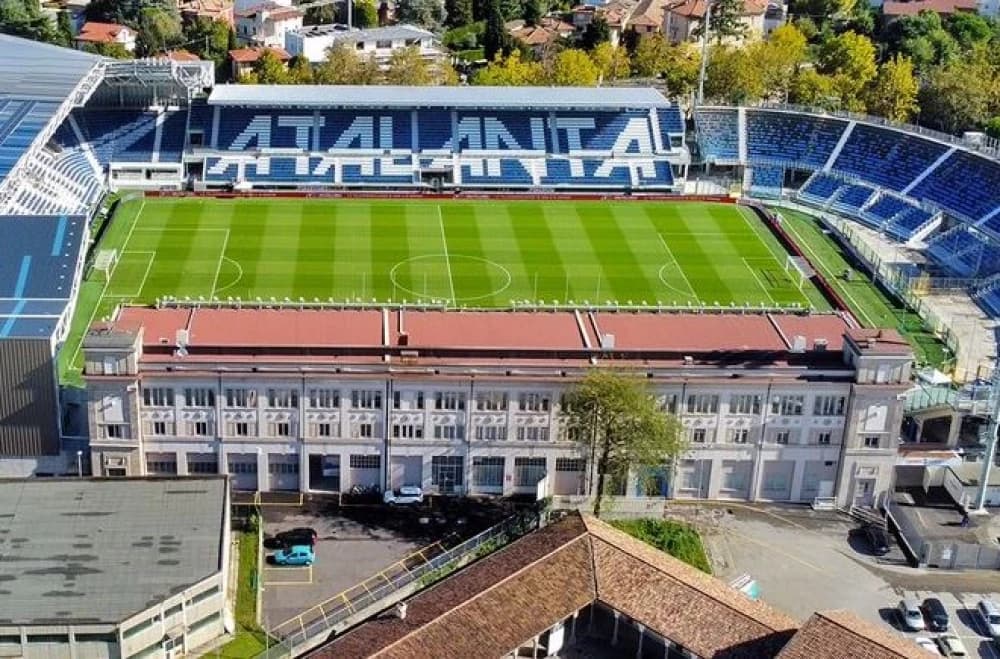
The Gewiss Stadium is not just Atalanta's home ground; it symbolizes their journey, community ties, and a commitment to delivering exceptional experiences for fans and players alike.
The Gewiss Stadium is a remarkable representation of Atalanta's achievements, determination, and steadfast dedication to the Bergamo community. Situated in the center of this historic northern Italian city, it serves as the impressive home venue for Atalanta, a club that has established itself as a prominent contender in both Italian and European football. In domestic competitions, it is known as the Stadio Atleti Azzurri d'Italia, while in UEFA matches, it is referred to as the Stadio di Bergamo, boasting a seating capacity of around 24,950.
Since acquiring the stadium from the local municipality in 2017 for €8.6 million, Gewiss Stadium has evolved into more than just a venue for matches; it stands as a symbol of ambition, transformation, and pride. The pitch dimensions are 120 meters in length and 70 meters in width, complying with international football standards. The club's ongoing dedication to redevelopment and modernization highlights its commitment to providing an outstanding stadium experience for players, supporters, and visitors alike.
The Gewiss Stadium serves not only as an essential home ground but also as a symbol of resilience, change, and community spirit. It exemplifies Atalanta's profound bond with the local community and its dedication to providing an exhilarating match-day experience, merging historical importance with aspirations for the future.
Memorable Matches
Throughout its history, the Gewiss Stadium has been the stage for exhilarating encounters and memorable matches that have left a lasting impact on Atalanta supporters. A remarkable highlight occurred during the 1984-85 Serie A season, when the stadium recorded an impressive attendance of over 43,000 fans during a match against Inter Milan, marking a pivotal moment in the club’s legacy.
On February 19, 2020, the UEFA Champions League knockout stage match against Valencia attracted a record home attendance of 44,236 spectators. This match demonstrated the stadium's capacity to create a thrilling atmosphere that engaged the entire city of Bergamo, while also highlighting Atalanta's rising influence in European football.
An equally memorable match took place on October 14, 2020, when Italy and the Netherlands played to a 1-1 draw in the UEFA Nations League. This match stood as a significant tribute to Bergamo, recognizing the city’s role as one of the early epicenters of the COVID-19 pandemic. Events like this serve to illustrate the stadium’s capability to merge local pride with an international presence.
Attributes & Amenities
The Gewiss Stadium is celebrated for its harmonious blend of a rich historical legacy and advanced modern enhancements. Early redevelopment initiatives, such as the removal of the running track in 1984, highlighted Atalanta's dedication to increasing capacity and enriching the overall match-day experience.
Recent renovations have introduced notable enhancements to the Curva Nord, now renamed the Curva Pisani in honor of Federico Pisani, as well as the Curva Sud, which is dedicated to Piermario Morosini. The renovated Curva Nord, featuring covered seating for more than 9,000 spectators, represents a significant improvement, prioritizing both safety and comfort for attendees.
Recent enhancements have incorporated updated seating layouts, exclusive luxury boxes, improved bench accommodations, and enhanced accessibility options for supporters with disabilities. Additionally, a repositioned press box that is closer to the pitch allows for better media coverage.
As redevelopment moves forward, the next phases are set to introduce further enhancements, including a reconstructed Curva Sud that will align with the modern features of Curva Nord. Planned expansions aim to increase the seating capacity to approximately 25,000, accompanied by the addition of an underground parking facility and improved infrastructure around the stadium, all to provide a seamless match-day experience for fans and players alike.
Significance in History
The Gewiss Stadium boasts a rich and illustrious history that has played a vital role in the evolution of football in both Bergamo and Italy. Construction of the stadium commenced in 1928 on Viale Margherita, taking the place of a former hippodrome that occupied the site. Initially named in honor of Mario Brumana during the fascist era in Italy, the stadium was subsequently renamed Stadio Comunale after World War II, symbolizing Italy's shift away from its fascist history.
Following the war, the stadium underwent several expansions, starting with the construction of the Curva Sud in 1949, which was succeeded by the Curva Nord in the 1960s. During the 1980s, the decision to remove the running track significantly boosted the seating capacity, accommodating the growing number of fans and the rising popularity of Serie A.
As the years progressed, Gewiss Stadium evolved into not just the home of Atalanta, but also a vital social focal point for the local community. It played host to AlbinoLeffe matches during their Serie B tenure from 2003 to 2019 and occasionally welcomed the Italy national team. These events emphasize the stadium's versatility and its significant role in nurturing local rivalries and enhancing national pride in sports.
Future Events
Atalanta's dedication to preserving and enhancing the stadium experience is ongoing through various redevelopment initiatives. The final stage of these upgrades involves the construction of the Curva Sud to complement the existing Curva Nord, along with other infrastructure enhancements that will raise the capacity to approximately 25,000.
While these renovations are expected to be completed by August 2024, the stadium will remain fully operational during the construction period, enabling Atalanta to provide a smooth match-day experience. The club's initiatives reflect a dedication to upgrading Gewiss Stadium into a world-class facility while honoring its local heritage and maintaining community connections.
Experience for Supporters
Experiencing a match at Gewiss Stadium is truly exhilarating. The electric atmosphere created by the passionate fans in the Curva sections, dedicated to Federico Pisani and Piermario Morosini, combined with the modern facilities added through recent renovations, ensures that each match-day experience beautifully fuses tradition with contemporary advancements.
Supporters have the advantage of being close to the pitchside stands, luxury suites, and seating designated for disabled fans, which promotes both comfort and interaction for all attendees. The atmosphere on match days is vibrant, with fans fervently cheering for Atalanta, fostering an electrifying environment that characterizes the football culture in Bergamo.
Atalanta's strong ties with the local community render each match a profound experience imbued with pride, loyalty, and an enduring connection to the identity and spirit of the city. The ongoing improvements to the stadium ensure that every visit stands as a tribute to the passion, resilience, and communal commitment that Atalanta shares with its supporters.